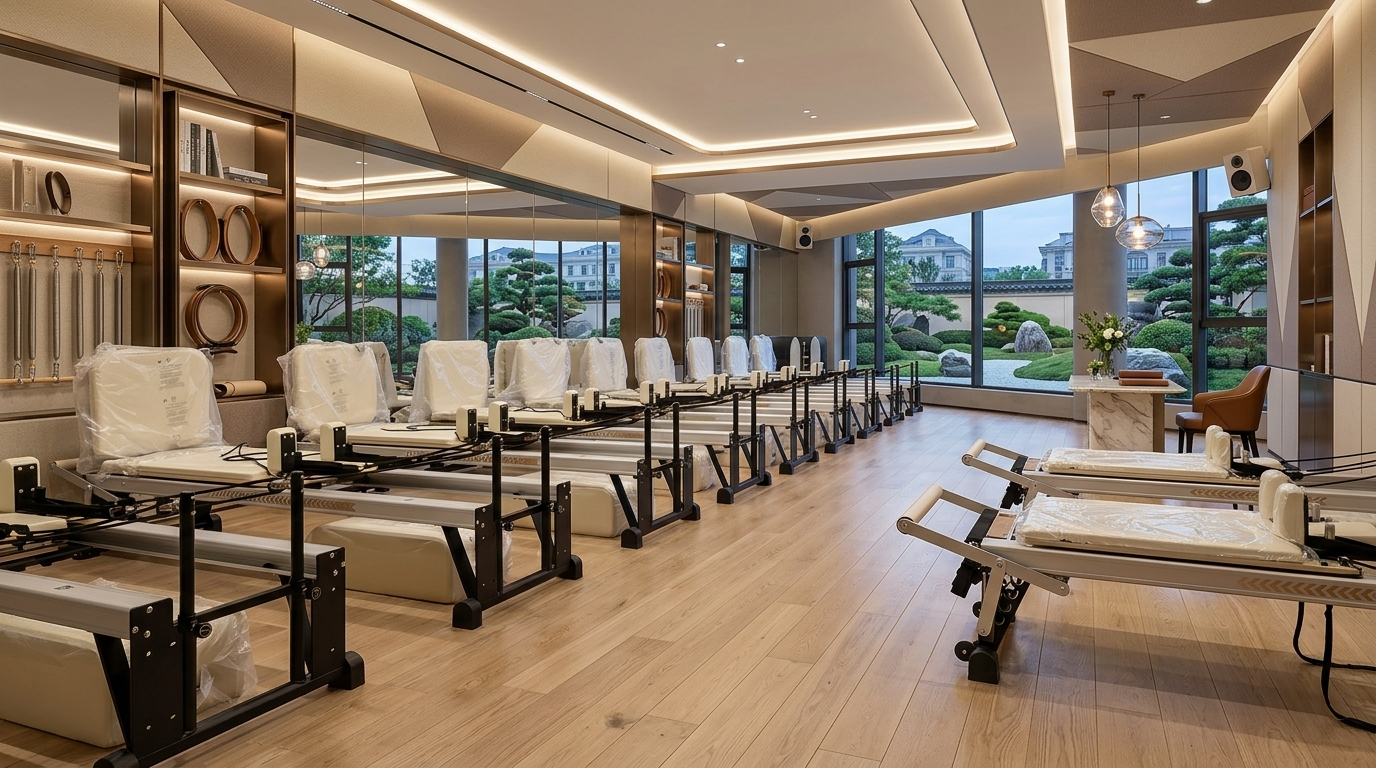
Two Pilates reformers can look similar in photographs yet perform differently after months of commercial use. Construction, adjustments, replacement parts and warranty terms all affect long-term value.
That is why choosing a commercial Pilates reformer should begin with your operating requirements, not appearance or unit price alone.
This guide explains how commercial buyers can compare specifications, prepare a project budget and evaluate suppliers. It also includes a specification worksheet and quotation checklist.
Start with how the reformer will be used
Before comparing models, define who will use the equipment, how often and how staff will manage adjustments, cleaning and maintenance.
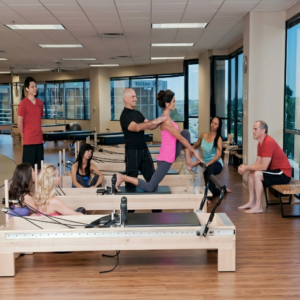
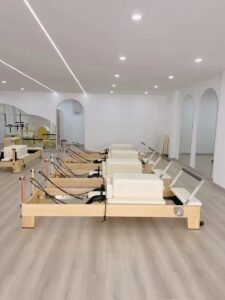
Pilates and yoga studios
Studios usually need equipment that can support repeated sessions and fast transitions between clients. Important considerations include daily class volume, the range of client heights and body types, adjustment speed, carriage noise and cleaning requirements.
Consistency also matters. When several reformers are used in one group class, instructors should not have to manage significantly different spring settings, rope systems or footbar mechanisms on each machine.
Rehabilitation and clinical facilities
Clinical buyers may prioritize controlled resistance options, stable access, a practical standing height and compatibility with towers or other accessories. Equipment must also fit the facility’s cleaning protocol and internal purchasing requirements.
Ask the supplier for complete technical documentation and confirm which accessories are included. Equipment selection should be reviewed by qualified professionals according to the facility’s intended use and applicable local requirements.
Gyms, hotels and wellness clubs
These facilities often serve users with different levels of Pilates experience. Straightforward adjustments, clear staff instructions and reliable after-sales support may therefore be more valuable than an extensive list of advanced options. The reformer should also fit the interior, service model and level of supervision.
Distributors and private-label brands
Wholesale and private-label buyers need suppliers that can reproduce approved materials, finish, configuration and packaging across repeat orders.
Evaluate sample approval, batch consistency, branding options, packaging design, production records and spare-parts continuity. You should also confirm whether logos, labels, manuals and packaging can be adapted for your market.
Create a one-page use profile covering application, quantity, requirements, configuration, destination and target delivery date.
Commercial Pilates reformer specifications that matter
Commercial reformer specifications should explain how the equipment will perform in daily operation. Avoid choosing a model based only on a material name, load figure or long accessory list.
Frame construction and stability
Commercial reformers are commonly made with solid wood or aluminum frames. Both can be suitable when the structure is properly engineered and manufactured.
Frame material alone does not determine quality. Construction, tolerances, hardware, finishing and quality control determine how the reformer performs over time.
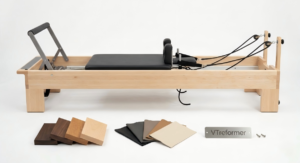
For wood, examine the timber specification, joints, finish and protection against moisture. For aluminum, review the profile construction, connection points, surface treatment and corrosion protection.
For either type, check:
- movement or flex under normal use;
- contact with the floor and leveling method;
- finish quality around joints and hardware;
- consistency between multiple units;
- written frame warranty and commercial-use exclusions.
If a supplier gives a maximum load rating, ask whether a defined test method or report supports it.
Dimensions, carriage travel and user fit
Overall length and width affect room capacity but do not describe the entire user experience. Ask for usable carriage dimensions, travel, standing height and recommended user range.
Tall users may require additional carriage travel or rope range, while clients with limited mobility may need a different access height. Map the full dimensions in the actual room, including instructor circulation, doors, storage and required emergency paths. Obtain written instructions before planning vertical storage.
Springs and resistance system
The resistance system affects programming, transitions and maintenance. Compare the number of springs, resistance levels, color coding, attachment method and replacement process. Ask how the supplier maintains batch consistency and identifies replacement springs by model, production year or serial number.
Terms such as “professional spring” do not prove performance. Request material information, test documentation or a clear replacement policy.
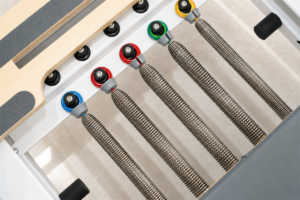
Footbar, headrest, shoulder rests and rope adjustment
Adjustments should be secure, easy to understand and practical during a busy class. Check footbar locking, headrest and shoulder-rest positions, rope range, left-to-right symmetry and the time required to change settings. Small differences matter when instructors repeat an adjustment throughout the day.

Upholstery, padding and cleaning
Commercial upholstery must tolerate frequent contact and cleaning. Ask for the material specification and approved cleaning products. Inspect seams, padding and fit around corners and handles. For multi-unit projects, confirm color consistency and whether individual upholstery components are replaceable. Material origin alone does not demonstrate abrasion resistance.
Wheels, bearings, ropes and pulleys
A short demonstration does not show how easy the carriage system will be to service. During sample evaluation, listen for unusual noise, check lateral movement, pulley alignment and rope tracking, and ask whether routine replacement can be completed locally. Wear parts should be identifiable and obtainable quickly enough to limit downtime.
Accessories and expandability
Common options include sitting boxes, jump boards, platform extenders, towers, poles, straps and handles. Clinical or specialist configurations may require additional components.
Marketing photographs may show a fully equipped reformer while the quotation covers only the base unit. Ask the supplier to separate:
- accessories included with the reformer;
- optional accessories;
- accessories that require a different frame or factory configuration;
- replacement items and consumables.
Commercial reformer specification worksheet
| Decision item | Information to request | Why it matters |
|---|---|---|
| Intended use | Studio, clinical, gym, hospitality or resale | Defines configuration and support needs |
| Frame | Material, construction, finish and warranty | Affects stability, maintenance and appearance |
| Dimensions | Overall size, carriage size and travel | Determines user fit and room capacity |
| Load rating | Rated load and supporting test method | Helps evaluate intended operating limits |
| Springs | Quantity, resistance levels and replacement supply | Affects programming and long-term operation |
| Adjustments | Footbar, headrest, shoulder rests and ropes | Affects class transitions and user fit |
| Upholstery | Material specification and cleaning guidance | Affects hygiene and replacement cycles |
| Wear parts | Parts list, pricing and identification process | Reduces future downtime |
| Accessories | Included, optional and compatible items | Prevents incomplete quotation comparisons |
| Warranty | Coverage, duration, exclusions and claim process | Clarifies the supplier’s obligations |
Build a total project budget, not a unit-price comparison
Commercial reformer project costs vary by model, material, configuration, quantity, customization, shipping route and destination.
A useful budget should include:
- The base reformer and selected configuration.
- Towers, boxes, jump boards and other accessories.
- Custom colors, finishes, logos, labels and packaging.
- Sample or pre-production approval costs.
- Export packaging.
- Transport to the port or logistics terminal.
- International freight and cargo insurance where applicable.
- Customs duties, import taxes and clearance charges.
- Destination delivery, installation and room preparation.
- An initial stock of springs, ropes or other wear parts.
- Staff or maintenance training where required.
- Expected maintenance and replacement costs.
Use the following structure:
Total landed project cost = equipment + options + packaging + origin charges + freight + insurance + duties and taxes + destination delivery + installation + initial spare parts
Ask shortlisted suppliers to quote the same requirement sheet and shipping term. An EXW quotation covers a different scope from FOB, CIF, DAP or DDP, so their headline prices are not directly comparable.
Studios should consider room capacity, consistency and downtime. Clinics may need specialized accessories and documentation. Distributors should include sample validation, branding, inventory and repeat-order logistics.
The lowest purchase price is not necessarily the lowest operating cost. Reliable parts support can reduce downtime and unplanned replacement expenses.
How to evaluate a Pilates reformer supplier
Evaluate suppliers through documents, samples and observable processes rather than marketing claims.
Product and manufacturing evidence
Request a current specification sheet for the exact model, including dimensions, materials, configuration, accessories and warranty.
You can also request:
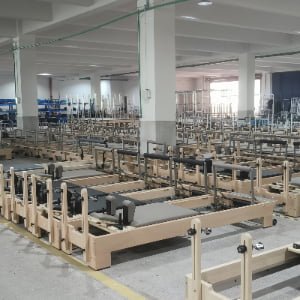
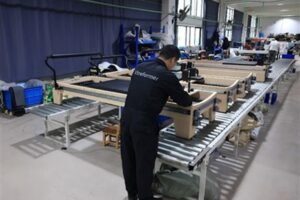
- real production and assembly photographs or a live factory video;
- material specifications;
- quality-control checkpoints;
- batch or serial-number traceability;
- relevant load or durability test information;
- packaging photographs or demonstrations;
- a written sample and approval process.
For private-label projects, record the approved sample, colors, finish, logo position, labels, packaging and included accessories.
Certification and claim verification
Do not accept certification logos as sufficient evidence. Ask for the actual certificate or report and check:
- the certificate holder;
- the product or management-system scope;
- the issuing organization;
- the certificate or report number;
- the validity period;
- whether it applies to the quoted product or only to a factory process.
An ISO management-system certificate is not product certification. A factory inspection or laboratory test by a third party also does not mean every product is certified by that organization. Confirm destination-specific requirements with the relevant authority or an import professional.
Warranty and after-sales support
A warranty duration is useful only when coverage and the claim process are clear. Ask for written terms covering the frame, springs, upholstery and other wear parts.
Check:
- commercial-use exclusions;
- evidence required to submit a claim;
- responsibility for replacement-part shipping;
- expected response and resolution process;
- parts identification by model and serial number;
- expected long-term availability of consumable parts.
Delivery and commercial reliability
Confirm lead time, production updates, inspection and packaging standards in writing. The quotation should state the Incoterm, payment schedule and validity period. For repeat orders, require approval for changes to confirmed materials or specifications.
Supplier red flags
Exercise caution when a supplier:
- refuses to provide a complete model specification;
- uses only rendered images and cannot show current production;
- sends certificates with mismatched company or scope information;
- advertises a warranty without providing written terms;
- cannot identify model-specific replacement parts;
- changes material or configuration details between quotation versions;
- offers a very low price while omitting major components;
- pressures you to skip sample approval or inspection.
Supplier quotation checklist
Before contacting a supplier, prepare:
- buyer type and intended application;
- destination country and postal code;
- required quantity;
- preferred wood or aluminum frame;
- reformer-only or reformer-with-tower configuration;
- required accessories;
- expected user range and daily class volume;
- finish, upholstery and color requirements;
- logo, manual, label and packaging requirements;
- documentation required for your destination;
- target delivery date;
- preferred Incoterm;
- installation or training requirements;
- initial spare-parts requirement.
Ask each supplier to return:
- an itemized quotation;
- the exact model and complete specifications;
- a list of included and optional accessories;
- packaging details;
- production lead time;
- shipping term and quotation validity;
- written warranty terms;
- after-sales and claim procedure;
- spare-parts list;
- payment milestones.
A practical five-step shortlisting process
1. Define the use profile
Record your application, expected usage, room constraints, user range, required accessories, quantity and destination.
2. Compare written specifications
Use one worksheet for every model. Do not rely on brochures with different levels of detail.
3. Review supplier evidence
Check manufacturing information, quality-control procedures, warranty documents, certificates and packaging.
4. Evaluate the actual product
Order a sample, arrange a live product demonstration or inspect the equipment through a qualified representative. Test adjustments, carriage movement, finish and accessory fit.
5. Compare total cost and support
Review landed cost, lead time, warranty obligations, replacement-part access and repeat-order consistency.
For larger or recurring purchases, consider a pilot order, pre-production sample or independent pre-shipment inspection.
How VTreformer supports commercial buyers
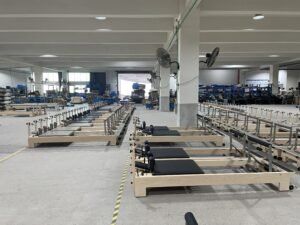
VTreformer supplies commercial Pilates equipment for studios, rehabilitation facilities, gyms, hospitality projects, distributors and private-label brands. Anhui Vita Fitness Equipment Co., Ltd. was established in 2016 and operates a 20,000-square-meter factory.
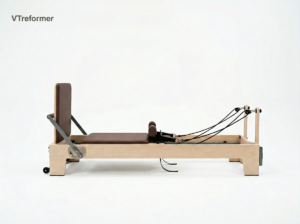
Available options include beech, oak and aluminum frames, with studio, clinical and home configurations. Customization can cover color, logo, nameplate, finish, frame color, configuration, packaging, labels, instructions and accessories. The minimum order quantity starts from one set.
Current warranty terms include 10 years for the frame, three years for springs and one year for wear parts. VTreformer also provides lifetime spare-parts support at factory-direct pricing. Available shipping terms include EXW, FCA, FOB, CIF, DAP and DDP, depending on the project and destination.
Buyers can request the product catalog to compare specifications, configurations, accessories and customization options. A live virtual factory tour can also be arranged.
Planning a commercial Pilates equipment project?
Request the VTreformer Product Catalog to compare reformer configurations, frame options, accessories and customization choices.
Frequently asked questions
What makes a Pilates reformer suitable for commercial use?
A commercial reformer should be selected for repeated daily use, stable construction, broad user adjustability, serviceable wear parts and written commercial warranty support. Evaluate the complete specification and support system rather than frame material alone.
Is a wood or aluminum reformer better for a studio?
Neither material is automatically better. Wood may suit a traditional studio aesthetic, while aluminum can support a modern appearance and different handling requirements. Construction quality, stability, dimensions, adjustments, maintenance and supplier support are more important than material alone.
How many reformers should a new studio buy?
The number depends on room dimensions, class format, instructor capacity, expected occupancy and startup budget. Map each machine’s complete footprint and safe circulation space before deciding.
What should be included in a commercial reformer quotation?
The quotation should identify the exact model, specifications, quantity, included accessories, optional items, packaging, customization, lead time, Incoterm, warranty, payment terms and quotation validity.
Should I order a sample before a bulk purchase?
A sample or pilot order lets you review construction, adjustments, finish, packaging and communication before approving larger production.
What warranty should a commercial buyer check?
Check coverage for the frame, springs, upholstery and other wear parts, along with exclusions, claim evidence, replacement-part freight and commercial-use conditions. Warranty duration alone is not enough.
How can I verify a Pilates equipment manufacturer?
Review company records, current factory evidence, product documents, certificate details, quality-control procedures and sample results. Consider a live tour or independent inspection for larger orders.
Choose with a complete operating picture
The right commercial Pilates reformer is not simply the model with the most accessories or the lowest quoted unit price. Begin with your operating model, compare specifications by their practical consequences and calculate the full landed project cost.
Then verify the supplier’s manufacturing evidence, written warranty, delivery scope and long-term parts support. Using the same requirement sheet for every quotation will help you make a more accurate and defensible purchasing decision.
Request the VTreformer Product Catalog to compare available configurations and customization options.
Already know your quantity, destination and preferred equipment? Request an itemized quotation.

-300x218.jpg)